
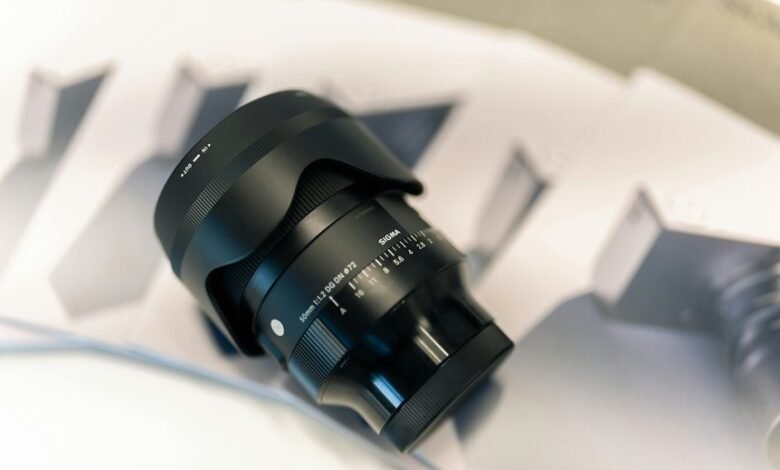
Maximize Performance 5137076996 Lens Orbit treats calibration and iterative observation as a disciplined workflow. The approach emphasizes a minimal, repeatable capture loop and documented decision thresholds to stabilize autofocus, exposure, and tracking. Data-driven collaboration informs rapid, scalable improvements, while real-world benchmarks reveal throughput, latency, and edge conditions. The method invites scrutiny and refinement, ensuring robust results as environments shift. A clear path forward awaits, anchored in measurable metrics and accountable decisions.
What the Lens Orbit Is and Why It Matters
The Lens Orbit refers to the cyclical sequence of observational passes and interpretive analyses that organizations use to monitor performance, identify anomalies, and guide optimization. This framework emphasizes lens calibration as a foundation, ensuring orbit stability across environments, while autofocus precision and exposure consistency anchor repeatable results. Data-driven collaboration enables rapid learning, disciplined iteration, and clear, freedom-minded improvements throughout the operational workflow.
How to Set Up the Lens Orbit for Fast Capture
To set up the Lens Orbit for fast capture, teams should begin by defining a minimal, repeatable observation-to-action loop that can be executed within seconds.


The approach emphasizes disciplined, data-backed steps: establish lens setup parameters, calibrate autofocus tracking, and document decision thresholds.
Collaboration ensures consistent execution, transparency, and rapid iteration toward reliable, scalable performance under variable conditions.
Real-World Results: Testing Performance Across Scenarios
Across multiple real-world scenarios, performance is evaluated with reproducible benchmarks that mirror operational conditions, enabling objective comparison of results and identification of edge cases.
In this lens orbit study, data-driven metrics quantify throughput, latency, and stability during fast capture under varied lighting and motion.
Methodical collaboration reveals trends, confirms robustness, and highlights opportunities for optimization across diverse usage contexts.
Conclusion
The Lens Orbit framework delivers a data-driven, collaborative path to rapid, reliable capture by codifying minimal loops and clear thresholds. Across environments, repeated tests reveal stable autofocus and exposure defaults that scale with performance metrics such as throughput and latency. By documenting decisions and sharing results, teams iteratively tighten tolerances and close gaps in edge cases. In short, this approach harmonizes precision with speed, like a well-tuned engine steadily accruing miles.