A small backyard sauna heater setup for two to three people generally needs a 6 to 8 kilowatt heater, roughly 15 to 20 square feet of build footprint, and a dedicated 240-volt circuit rated for 30 to 40 amps. Most homeowners land the full project, heater, cabin kit, and basic electrical work, somewhere between $3,500 and $7,000, depending on how far the wiring run sits from the main panel. A yard as small as 8 by 8 feet can hold a compact two-person cabin without crowding a fence line or patio.
How Much Space Does a Sauna Heater Really Need?
Footprint planning starts with the heater’s guard rail, not the cabin walls. Most manufacturers call for 3 to 4 inches of clearance between the guard and any combustible surface behind it, with a bit more room left open in front for loading stones and reading the control panel. The cabin itself needs a few extra inches of clear air on every side beyond the interior seating, since a box built flush to a fence traps humidity and slows the wood’s drying time between sessions. A 6 by 6 foot cabin with a 7 foot ceiling fits comfortably on an 8 by 8 foot pad, leaving enough gap around the perimeter for the door to swing fully open. Check the local setback rule before pouring a pad, since many municipalities require 3 to 5 feet of clearance from a property line for any permanent outdoor structure, sauna included.
What Size Heater Fits a Compact Two-Person Cabin?
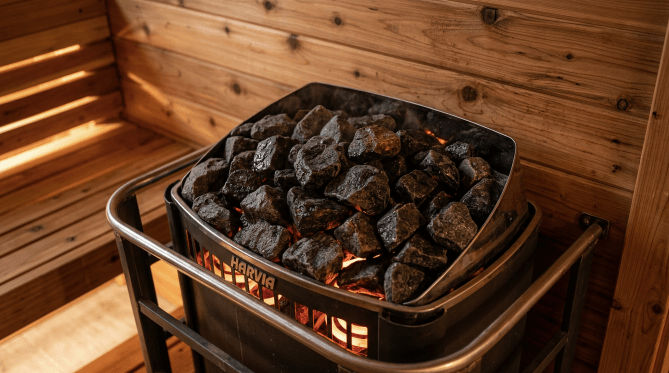
Heater sizing follows cubic footage, not floor space, which is where a lot of small-yard buyers get it wrong. A common starting formula is roughly 1 kilowatt for every 45 to 60 cubic feet of well-insulated cedar interior. A 6 by 6 foot cabin with a 7 foot ceiling works out to about 252 cubic feet, which lands the baseline heater size around 4.5 to 5.5 kilowatts. Add another 15 to 20 percent if the door or a side panel is glass, since glass loses heat far faster than an insulated wall, which typically pushes a small two-person build to a 6 kilowatt unit. Home heaters generally hold 40 to 50 pounds of igneous rock, usually peridotite or olivine, in the stone chamber; overloading that chamber strains the heating element and shortens its working life, while underfilling it produces a thinner, less humid steam when water hits the rocks.


What Should You Budget for Electrical Work?
This is the line item that catches most small-yard buyers off guard. A heater rated 6 kilowatts or higher almost always needs its own 240-volt circuit on a 30 to 40 amp double-pole breaker, and a detached backyard structure that sits any distance from the house may need its own sub-panel rather than a long single run. Get a firm quote from an electrician before ordering the heater itself, since trenching and conduit cost swings widely based on distance from the main panel and whatever obstacles sit between the two. Local code in most areas also requires a disconnect switch mounted within sight of the heater, which is a small added cost but not one to skip.
What Does a Small Backyard Setup Cost Once You Add It Up?
Sticker price on a 6 kilowatt heater alone typically runs $600 to $1,200, which rarely reflects the finished project cost. A cedar cabin kit sized for two people generally lands between $2,000 and $4,000, and a dedicated electrical run adds another $500 to $1,500 depending on distance from the panel. Specialty dealers including Harvia, HUUM, and SweatDecks’ lineup list heater wattage and stone capacity model by model, which makes it straightforward to compare a compact 6 kilowatt unit against a larger one before committing to a pad size. Buyers who shop on heater price alone, without pricing the electrical work first, tend to be the ones surprised by a final bill that runs 30 to 40 percent past the number printed on the box.
See also: Challenges in Technology Lifecycle Planning
What Mistakes Shrink a Small Setup’s Lifespan?
An undersized breaker that trips under load is the most common early failure, usually traced back to a heater bought before the electrical run was priced out. Placing the cabin flush against a fence blocks the airflow the wood needs to dry between sessions and can violate a local setback rule at the same time. Skipping the small vent gap under the door, generally about three quarters of an inch, traps stale air and slows heat recovery after the door opens. Overloading the stone chamber past its rated capacity cracks rocks faster and stresses the element, while stacking firewood or storage bins against the cabin’s exterior wall ignores the same airflow clearance the heater needs on the inside.
What Does the Evidence Say About Frequent Use in a Small Home Setup?
A compact backyard heater still delivers the same session as a larger commercial unit, and the research on regular sauna use applies regardless of cabin size. A 2018 review in Mayo Clinic Proceedings summarized cardiovascular associations found across multiple population studies, including favorable vascular function markers among frequent bathers. A separate systematic review in Evidence-Based Complementary and Alternative Medicine reached similar conclusions about regular dry sauna sessions and reported cardiovascular outcomes. An older but still widely cited paper in The American Journal of Medicine outlined both benefits and risks of sauna bathing, noting that most healthy adults tolerate regular sessions well while people with unstable heart conditions should be more cautious. These are association-level findings from cohort and observational research, not proof that a home unit prevents any specific outcome, but they support what a small, consistently used backyard cabin is generally understood to offer.
Frequently Asked Questions
How small can a backyard sauna heater setup be? A two-person cabin can fit on an 8 by 8 foot pad, including clearance on each side for airflow and maintenance access. The heater itself typically needs 3 to 4 inches of side clearance from any combustible wall behind its guard rail.
Does a small cabin need a smaller heater? Mostly yes, since sizing follows interior cubic footage rather than floor space. A tight, well-insulated two-person cabin usually needs 4.5 to 6 kilowatts, with an extra allowance if the door or a wall panel is glass.
Can a small yard sauna run on a standard household outlet? Only the smallest infrared units plug into a standard 120-volt outlet. Most electric heaters rated 6 kilowatts or higher need a dedicated 240-volt circuit on a 30 to 40 amp double-pole breaker.
How long does a compact heater take to reach temperature? A correctly sized 6 kilowatt heater in a small two-person cabin typically reaches 170 to 180 degrees Fahrenheit in 30 to 45 minutes. An undersized heater can take twice as long and still fall short on cold days.
References
- Cardiovascular and Other Health Benefits of Sauna Bathing: A Review of the Evidence, Mayo Clinic Proceedings, 2018
- Clinical Effects of Regular Dry Sauna Bathing: A Systematic Review, Evidence-Based Complementary and Alternative Medicine, 2018
- Benefits and risks of sauna bathing, The American Journal of Medicine, 2001
By Melissa Carpenter