
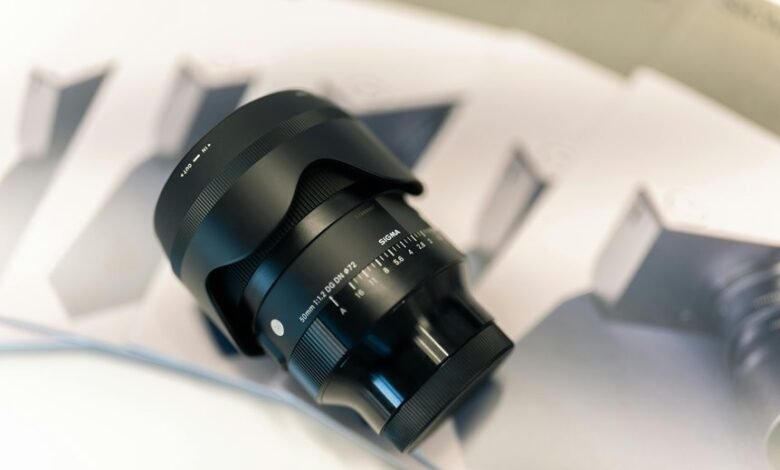
The Pulse Lens 5635516601 is described as guiding light paths to sharpen focus and reduce aberrations. It emphasizes chromatic correction and controlled ray tracing to enable rapid sequence imaging with lower rework. Throughput gains depend on stable imaging and standardized interfaces for deployment. The discussion will address setup, compatibility, and measurable performance improvements, while noting potential tuning challenges and validation needs that invite further examination.
How the Pulse Lens 5635516601 Boosts Focus and Throughput
The Pulse Lens 5635516601 enhances focus and throughput by precisely guiding light and minimizing aberrations, thereby improving image sharpness and data accuracy at high operational speeds.
The mechanism supports focus optimization through controlled ray paths and chromatic correction, reducing blur under rapid sequences.


Consequently, throughput improvement arises from stable imaging, reduced rework, and consistent data capture across diverse operational scenarios.
Practical Integration: Setup, Compatibility, and Best Practices
How can practitioners ensure seamless deployment of the Pulse Lens 5635516601 within existing systems while preserving performance gains? Practical integration emphasizes modular deployment, standardized interfaces, and rigorous validation. Focus optimization requires targeted profiling and minimal disruption during rollout. Compatibility challenges are mitigated through interface adapters and comprehensive regression testing, ensuring stable operation across platforms. Documentation, governance, and incremental deployment solidify repeatable, scalable success without regressive tradeoffs.
Real-World Gains: Performance Metrics, Tuning Tips, and Troubleshooting
Real-world gains for the Pulse Lens 5635516601 are assessed through standardized performance metrics, disciplined tuning, and systematic troubleshooting. This evaluation employs objective benchmarks, reproducible tests, and transparent reporting to quantify impact.
Focus optimization emerges as a primary driver, guiding configuration choices and workload alignment. Latency reduction is targeted through pipeline minimization, efficient scheduling, and disciplined resource management.
Conclusion
The Pulse Lens 5635516601 delivers precise focus and consistent throughput by guiding ray paths and correcting chromatic aberrations, enabling sharper images at high speeds. Rigorous validation and standardized interfaces reduce deployment risk, while modular integration supports scalable adoption. This methodical design cultivates reliable performance across platforms, minimizing rework. In the end, its disciplined tuning acts as a steady compass, steering complex imaging systems toward clarity and efficiency, inspiring confidence amid rapid operational demands.